Chelsea's Evolution: A Reflection on Past, Present, and Future
Exploring the distinct eras of Chelsea Football Club and how recent developments raise questions about the club's trajectory.
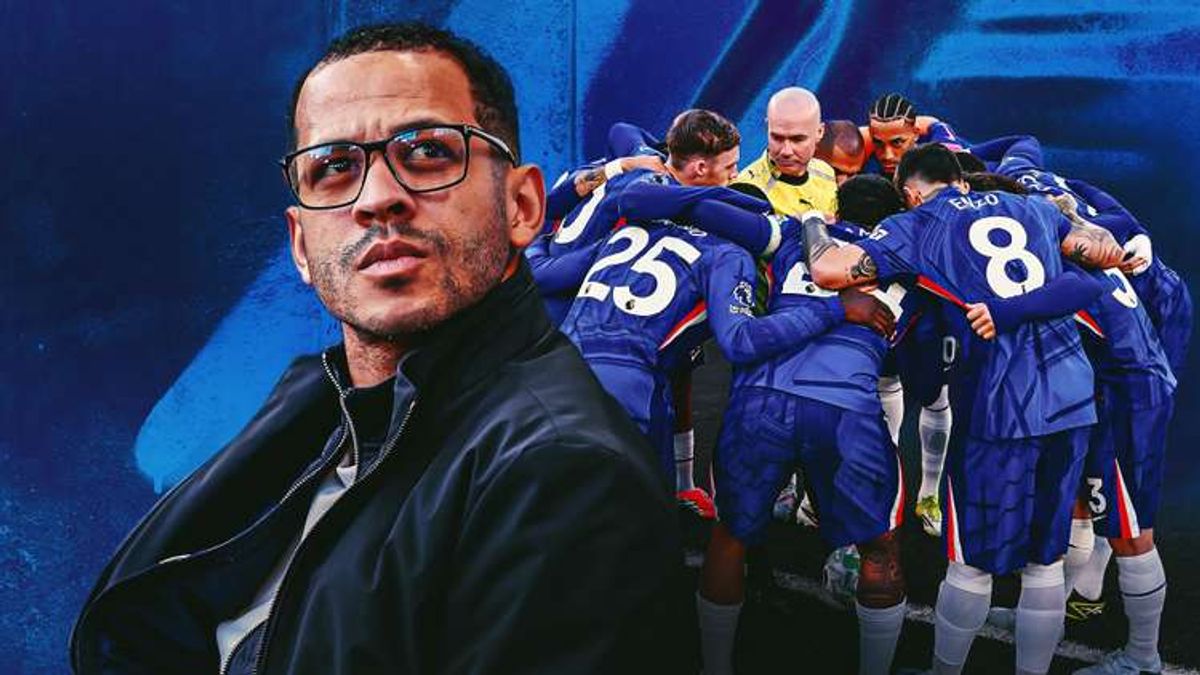
The history of Chelsea Football Club can be split into three separate eras. You have everything that happened before Roman Abramovich's takeover in 2003, everything that happened under the Russian oligarch's control, and everything after he was forced to pass over the keys to the club to the BlueCo-Clearlake consortium in 2022.These are three distinctly different periods. The original Chelsea were founded to occupy Stamford Bridge when it was renovated from an athletics ground into a football stadium in 1905, and from there, the Blues became one of London's newer clubs. They won one league title in the 20th century, but they at least had an identity about them, forming the older guard of supporters who still love the club and follow them today. Through 19 years of Abramovich's rule, Chelsea claimed every honour in the club game. Winning was the be-all and end-all.Now? Chelsea are the footballing equivalent of a hedge fund, seemingly with the goal of being an uber-expensive version of Brighton or Brentford. It is massively at odds with the previous ages which came before. Perhaps worst of all, they are losing their status as a serious sporting institution with a series of PR and on-pitch gaffes.In a Premier League season blighted by performative nonsense more than any other, Chelsea are doing their best to come out on top in those stakes. It's much easier to do that than win the title, after all.The Blues' most recent trivial offence relates to the players' huddle at the start of every half, taking it upon themselves to do it over the ball on the centre circle before kick-off. Prior to Saturday's 1-0 loss at home to Newcastle, referee Paul Tierney was comically caught in the middle of that huddle."There's more focus and emphasis on the things that don't matter," manager Liam Rosenior bemoaned. "I'm going to make it really clear. I want to protect my players. I'm respectful to the game. My players made the decision that they wanted to be around the ball, to respect the ball and show unity and leadership. That is not my decision. That was a decision between the leadership group and the team."My players made a decision that they wanted to huddle around the ball to show unity; it's not my decision. There's nothing disrespectful about it. If Paul had focused more on his job, which is to make the right difference, we would have had a penalty today. Let's focus on the things that are important."I'll be honest, I didn't speak to Paul today or his officials, but I'll be speaking to the PGMOL and the refs to try and get an understanding of why that happened today. We were told, in the rule book, it's about timing. I just want to find a solution to this. We're talking about something that's nowhere near as important as what happened."Obviously, Rosenior coming out with such drivel is ridiculous. At best, it's a deflection tactic to protect his players from scrutiny and absorb it himself. But when you're sixth in the Premier League instead of fighting for the title, it's harder to look past the gibberish.Speaking on his Sky Sports podcast, Gary Neville said of Chelsea's 'almost cultish' huddle: "I thought it was extremely odd. Really weird. I've never been a fan of huddles."If you've prepared for seven months of a season, four days before the game and then you need a huddle 10 seconds before kick-off to talk and motivate each other, you've done something wrong in your preparation. No words can help you, in my opinion. No words should be able to help you seconds before a football match. You've done all your preparations. You've analysed the player you are playing against. You know how to create opportunities if you're an attacking player."You're in the changing room 10 minutes before you go out. You've said everything. What more can be said in a huddle out on the pitch? It's just for show. The fans won't be conned by that. They will judge you on your performance."It won't intimidate a good team. It didn't intimidate Newcastle. It's weird to do it in the centre of the pitch. It's like 'what's the most gimmicky thing we can do to make people believe we have team spirit?' I think it's a nonsense. The whole thing is a nonsense. Stop doing it."The huddle discourse is far from the only questionable call Chelsea and Rosenior have made of late. It is, rather, the culmination of all the strange incidents which came before.Robert Sanchez isn't a world-class goalkeeper. That's not exactly a secret, but he has managed to make major strides this season. You could even go as far as to saying he has been one of Chelsea's better performers across the year. Yet after flapping at a couple of crosses in last month's defeat at Arsenal, Rosenior decided to give Filip Jorgensen some starts.Lo-and-behold, this came back to bite the Blues. Jorgensen was in-part signed to provide an alternative to Sanchez on the ball, but the Dane is not a definitive upgrade at all. It was his wayward passing and kicking that chiefly led to Paris Saint-Germain beating them in the first leg of their Champions League last-16 tie, with the reigning kings of Europe running out 5-2 winners when it seemed Chelsea could have taken a draw back to Stamford Bridge."The way I work with goalkeepers - I don't have an outright number one," Rosenior proclaimed after taking Sanchez out of the starting XI. Unfortunately, the history of football has told us you can't treat goalkeepers the same way as outfielders in this regard. You do need a first-choice and a back-up. You are not a tactical genius for being the umpteenth person to try and fail to prove otherwise. There has to be a hierarchy, particularly in a team lacking on leadership at the back.Add GOAL.com as a preferred source on Google to see more of our reportingAfter Reece James signed a new long-term contract last week, Chelsea made a big song and dance over the fact a Cobham academy graduate had decided to commit their future to the club. It's only now that the hierarchy have decided that the academy pipeline is a positive on the pitch, rather than only on the balance sheet.Ever since BlueCo's arrival and the appointment of Laurence Stewart and Paul Winstanley's as co-sporting directors, Chelsea have sold on many credible first-team stars who had been at the club since they were children. Most of them left in the name of PSR needs, with academy sales counting as 'pure profit'.You can look at a handful of names and realise the error of Chelsea's ways. Left-backs Lewis Hall and Ian Maatsen are probably the standouts still playing in the Premier League, but there are two instances which rankle more than others.Mason Mount's acrimonious exit in 2023 was complex and, to be fair, can't fully be pinned on BlueCo. The overarching point is Mount was Chelsea through and through, one of the primary reasons why they won their second Champions League and seemed destined to play for them until the day he retired. It's a shame more than an outrage that he is a Manchester United player.But then there's Conor Gallagher. Rivals Tottenham first wanted him in 2023, though he didn't want to leave and new head coach Mauricio Pochettino didn't want to sell him, despite Chelsea's openness to a deal for PSR reasons. Gallagher stayed for one more year, was named a vice-captain by Pochettino, and was then put up for sale.Gallagher had agreed to join Atletico Madrid, but they wanted to sell a player back to Chelsea as part of the arrangement. Striker Samu Aghehowa was the initial candidate, but that deal didn't go through. Instead, the Blues brought back Joao Felix following an underwhelming loan spell in 2023. To announce Felix's signing, Chelsea posted a clip of him at Cobham on social media with the caption, 'Home again'. The extra slap in the face is that the Portugal international was bombed out of the squad five months later.Chelsea's decision to remove Enzo Maresca from his post - first thing on New Year's Day, no less - was seen as surprising and controversial at the time. He guided the team back into the Champions League during his first season as a Premier League head coach, while he also led the Blues to Conference League and Club World Cup glory. The team weren't exactly in fantastic form at the time of his departure, but they had still produced some mighty performances, notably against Barcelona and Arsenal, during the final weeks of his reign.Rosenior was brought in from sister-club Strasbourg as part of BlueCo's supposed long-term strategy. And, in fairness, he made a decent start, winning seven of his first nine games. Until the weekend just gone, his only defeats had been to Arsenal (three times) and PSG, though there is now a blot in the form of Newcastle's name on that list.Sky Sports in Switzerland now report that Rosenior's future is already uncertain following the first blip of his tenure, and the next few games will prove 'decisive' in whether he will continue much longer into a six-and-a-half year contract.The great irony here is firing and hiring managers in the pursuit of success was a staple of the Abramovich premiership, but this ownership group cannot possibly preach long-term security if they are doing the same thing without anywhere near the same level of major success. If Rosenior goes before this calendar year is out, then so should co-sporting directors Stewart and Winstanley.So, here Chelsea are. Facing elimination from the Champions League in a tie they were competitive in at worst and on top of at best through 70 minutes at Parc des Princes. The complexion of the second leg is much different now after their youthful exuberance got the better of them.There is still a missing element to Chelsea's project, and it's the lack of seniority in the team to actually guide the way. The club have been hopeful of growing their youthful players into those roles, but when all they know is ill-discipline and are living in a culture without accountability, they will remain young at heart.PSG will be able to play with the freedom of a Ligue 1 game on Tuesday. They don't even need to win the game, merely not lose by three goals. The only consolation for Chelsea, if this club of all clubs didn't somehow know it already, is that if you throw enough money at the wall, enough will stick to make a competent football team. They just need to start prioritising where they're chucking those pound notes.
Reflecting on Chelsea's Origins and Golden Era
The history of Chelsea Football Club can be split into three distinct periods: pre-Roman Abramovich takeover, the successful period under his ownership, and the current phase post-handover to the BlueCo-Clearlake consortium. Chelsea's roots trace back to 1905 when they were founded to occupy Stamford Bridge, shaping their identity as one of London's newer clubs. Despite limited league title success in the 20th century, Chelsea had a loyal fanbase and a sense of tradition.
The Abramovich Era: Triumphs and Transformations
Under Roman Abramovich's reign, Chelsea experienced a golden era of success, winning numerous titles and establishing dominance in the club game. However, the focus on winning above all else transformed Chelsea into a powerhouse driven by financial prowess. The club's identity shifted from a traditional football club to a high-spending entity, known more for its financial muscle than its heritage.
Current Challenges and Controversies
In the present era, Chelsea faces a series of on-pitch and PR challenges that question the club's seriousness and direction. Incidents like the controversial player huddle and tactical decisions have raised concerns about Chelsea's focus and professionalism. The recent managerial changes and player movements have added to the uncertainty surrounding the club's future trajectory.
Navigating Uncertain Waters
As Chelsea navigates through transitions on and off the pitch, there is a need for stability and a clear vision for the future. The lack of senior leadership, coupled with issues in player management and decision-making, poses challenges for the club. Finding a balance between tradition, success, and financial strength will be crucial for Chelsea to regain its status as a serious sporting institution.