Galliani's Masterstrokes: Unveiling the Greatest Signings in AC Milan History
Embark on a journey through the legendary signings orchestrated by Adriano Galliani during his illustrious tenure as CEO of AC Milan. Learn firsthand the stories behind securing the likes of Sacchi, Ancelotti, Nesta, and Ibrahimovic that shaped the history of the Rossoneri.
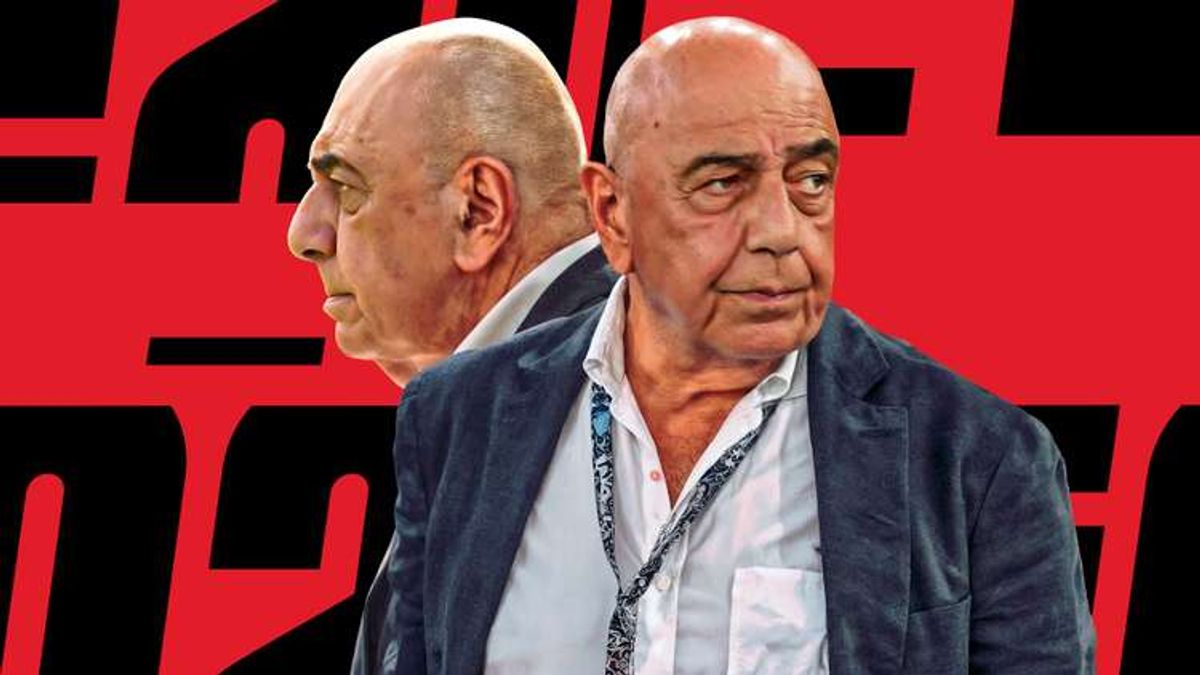
The story behind all the best signings in the former Rossoneri CEO's career.A life devoted to football, a distinguished career in the management of AC Milan.Adriano Galliani, former CEO of the Rossoneri, gave a lengthy interview to the Colpi da Maestro podcast. He shared many anecdotes and behind-the-scenes stories about his long experience at the club based in Via Aldo Rossi, including his first words in which he selected his best season at Milan: "If I had to choose one of my 31 years at Milan, I would say the 1993-1994 season."Below are all his statements.First and foremost, Galliani spoke about the various Milanteams he experienced with coaches of the calibre of Arrigo Sacchi, Fabio Capello and Carlo Ancelotti: "That Milan team thought big because its president, Silvio Berlusconi, thought big. And he passed this on to the club, the coaches and the players. When I think back to when we chose Sacchi, people said we were crazy. Arrigo made his teams play well, but he was a coach who, in the year before coming to Milan, had failed to win promotion from Serie B with Parma. Capello was said to be Berlusconi's favourite because Fabio hadn't coached for years and was doing other things. The third coup was Ancelotti, who was called the 'successful loser' because in the two years before Milan he was at Juventus and finished second twice. It is not only the masterstrokes regarding players that should be remembered, but also those regarding coaches. After Milan, I returned to Monza, and I believe that one masterstroke was to take the Primavera coach Palladino and bring him into the first team. Coaches have a significant impact on the results of teams. "There have been different periods. I'll start with Sacchi: for Berlusconi, the most important thing was to play well. The year before, we played a friendly match against Parma and saw the Emilian team play well. In the Coppa Italia, we drew Parma, who came to Milan and played very well. Berlusconi asked me if Parma had better players than Milan, and I obviously said no. Then he asked me why they played better than us. I replied, 'I don't know, they must have a good coach'. Milan finished second in that Coppa Italia group, which was won by Parma. In the round of 16, who did we draw again? Parma, who returned to Milan and beat us for the second time. At that point, we thought it was no coincidence. After the return leg, we asked the Parma president to go to dinner after the match, and at that dinner we met Sacchi. We talked, but we didn't come to a conclusion. In the following months, we decided that Sacchi had the right characteristics to coach Milan. When he arrived, he won the Scudetto in his first year, the European Cup in his second year and the European Cup again in his third year. When Sacchi came to us, he didn't ask for money, he let me set the figure. He said that was fine, but added that if he won, the amount would be doubled during the year, the following season it would start again at double, and if he won the league or the European Cup again, it would be doubled again, and then the same thing in the third year. And so, in the end, he bought a few hotels in Milano Marittima (laughs, ed.).He then explained the origin of the nickname Condor and what happened in the final days of the transfer market: "It comes from a film called 'The Three Days of the Condor'. I thought that the three days of the Condor were the final days of the transfer market. I ended up doing a hundred transfer markets. I started my career in 1975 at Monza and ended with the Monza transfer window in 2025. The first deal was a swap: Monza took Braida and gave Palermo Peressin. I remember all the deals. Since 1975, I have always seen one thing: the value of players decreased as the transfer window progressed. If you have to sell a player, you have to sell him at the beginning of the transfer window; if you want to buy, you have to do it at the end. I think all teams have more players than they need. So the Condor days must be the last days. Not always, but often in the last few days, deals that were no's become yes's, or even deals that seemed impossible become possible. That's how the Condor days come about.Add GOAL.com as a preferred source on Google to see more of our reportingHe also commented on the transfer deals he was most proud of during his career: "Let's start with the first deal at Condor, namely Carlo Ancelotti. It was 1987, Sacchi wanted him at all costs and pushed hard to sign him despite his knee problems. Sacchi said that knees can be treated, but the mind cannot. It was the penultimate day of the transfer window and the Roma president kept saying no. I had given up a little, but Braida was clever and organised a dinner with Roma. That evening, we realised that the president kept saying no, while his son and sporting director Perinetti were saying yes. The son invited me to Rome the next day and arranged a meeting with his father. The next morning, I took a plane to Rome. What seemed impossible happened. Ancelotti gave us a big hand in those seasons, but I also think something else: if that relationship hadn't been created, Carlo would have gone to Parma in 2022 because he had almost signed for them. Another coup by Condor took place in Paris in 1997 when we signed Leonardo from PSG. Capello, who had returned to Milan, absolutely wanted him, but Berlusconi and I didn't want to spend any more money, so we told him about us. But then something incredible happened: I was in Florida and had to return to Milan the next day. As I was about to go to the airport, I saw a huge sign that said 'Leonardo'. So I immediately called President Berlusconi and told him I had had a vision, and so I flew to Paris to get Leonardo from PSG. I was fortunate enough to know the PSG owners well, and they received me immediately, so we signed Leonardo. Then, if I had to name another great signing from Condor, I would say Alessandro Nesta without a doubt. I was in Sardinia and had coffee every morning with the Lazio chairman, Cragnotti. I had reached an agreement with him for a very significant amount, 60 billion old lire, but Berlusconi said no. We had won the preliminary rounds and would therefore be participating in the Champions League. That night, Berlusconi was in Copenhagen with other prime ministers. I saw an interview with the president on the news in which he was asked if his ministers were free to move around, and he replied that ministers, within the budget, could move the budget as they saw fit. At that point, I seized the opportunity and, through one of his bodyguards, managed to speak to Berlusconi and asked him, 'But as CEO of Milan, am I equivalent to a minister?'. He replied yes. I told him that if we signed Nesta, we would win the Champions League, and if we won the Champions League, we would make a lot of money. Berlusconi, perhaps a little tired as it was 4 a.m., made it clear that I could sign him. My friend Fedele Confalonieri tells me that I was lucky to understand immediately when Berlusconi said yes and meant yes, said yes and meant no, said no and meant no, and said no and meant yes. Nesta arrived and we won the Champions League, which will always remain in my heart. The pleasure of beating Inter in the semi-final and then Juventus in the final is something that will probably never happen again. And Nesta gave us a big hand."Finally, a long story about the negotiations that brought Zlatan Ibrahimovic back to Italy: "I'll tell you about Ibrahimovic. I was in Barcelona with the president of Barça and Mino Raiola. The year before, Ibra had been bought by the Spanish club from Inter for a huge sum. I thought it would be impossible to sign him after just one year. A few days before the transfer window closed, Raiola, who was the master of the transfer market, called me and told me to go to Barcelona because it could be done. I went to Barcelona and began a great battle to sign Ibra, and in the end I managed to sign him on loan with an option to buy. I had to convince Ibra, so I went to his house, where his wife and children were also present. His wife left in the morning and returned in the early afternoon to find me there. She hadn't asked who I was beforehand. Ibra told her and added that I wouldn't leave their house until I had signed with Milan. Zlatan then signed, and we won the Scudetto that year.MASTERSTROKE - "The masterstroke that I share with Braida was Marco van Basten. It may not have been the most difficult move, but I believe Marco was the best of them all."
Galliani's Legacy at AC Milan
Adriano Galliani, the former CEO of AC Milan, recently graced the Colpi da Maestro podcast with a plethora of captivating tales from his 31-year stint at the club. Recalling the pinnacle of his career during Milan's 1993-1994 season, Galliani delved into the intricate details of the exceptional signings and managerial decisions that defined his era at the club.
Revolutionizing Milan's Coaching Lineup
Galliani reminisced about the era of Arrigo Sacchi, Fabio Capello, and Carlo Ancelotti, each an integral part of Milan's success. The audacious moves of bringing in Sacchi, despite initial skepticism, and backing Capello and Ancelotti during crucial moments showcased Galliani and Berlusconi's dedication to excellence.
Chronicles of the Condor Days
The origins of the legendary 'Condor' moniker unfolded as Galliani shared anecdotes from his numerous transfer dealings. The high-pressure final days of the transfer market, aptly termed 'Condor days', often witnessed dramatic turnarounds in deals and player acquisitions that shaped Milan's destiny.
Memorable Transfer Triumphs
From acquiring Carlo Ancelotti in a last-minute coup to the Parisian escapade for Leonardo and the perseverance leading to Alessandro Nesta's signing, Galliani's expertise in strategic negotiations shone through. The accounts of securing these iconic players shed light on the meticulous planning and bold decision-making that characterized Galliani's reign.
The Ibrahimovic Saga
The captivating narrative of bringing Zlatan Ibrahimovic back to Milan highlighted Galliani's unwavering determination and negotiation skills. Against all odds, Galliani orchestrated the return of the Swedish powerhouse, epitomizing his ability to secure marquee signings even in challenging circumstances.
Masterstrokes and Transfers of a Lifetime
Galliani's insights reflected not only on the greatness of signings like Marco van Basten but also the nuanced intricacies of deal-making that defined his career trajectory. The combination of vision, persistence, and a touch of serendipity shaped Galliani's legacy as one of the most influential figures in AC Milan's history.