PSG and Chelsea: A Comparative Analysis of Footballing Excellence and Club Management
Exploring the intricacies of PSG and Chelsea, two football giants with contrasting histories and management approaches, as they prepare to face off once again in the Champions League. From transfer strategies to on-pitch performance, here is a deep dive into the similarities and differences that define these clubs.
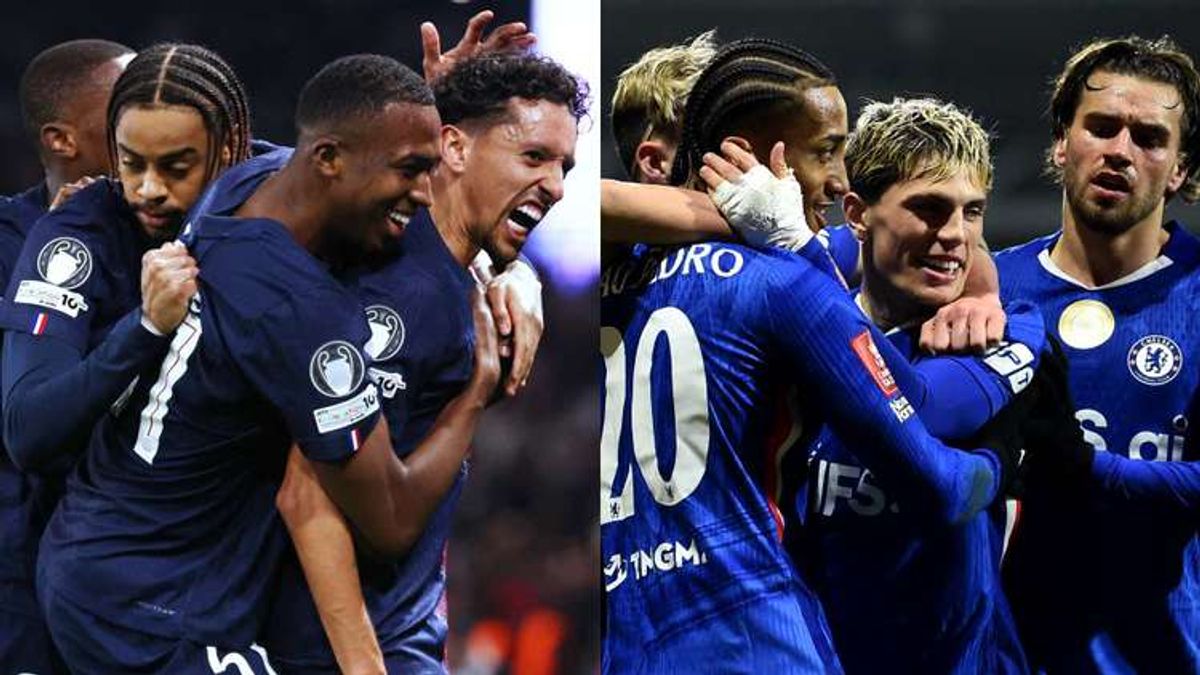
What do PSG and Chelsea have in common and, above all, how do they differ?PSG and Chelsea, them again, facing each other once more in the Champions League. It's time for what is becoming a true European classic, which this time will decide which of Luis Enrique and Rosenior's teams will snatch a place in the quarter-finals. A clash between two different styles of play, but also between two club managements – both millionaires – yet very different in many ways. From the transfer market to the need to rejuvenate the squads to the trophies, here is a comparison between the two clubs.As mentioned, the match between PSG and Chelsea is one that has become a regular fixture in European football over the years. Both clubs had a less than stellar past, but since the arrival of the sheikhs for the Parisians and Abramovich for the Londoners, things have changed. Thanks to Al-Khelaifi's management, PSG has monopolised Ligue 1 and established itself among the elite of world football. A similar situation can be seen at Stamford Bridge, which, despite changing hands and now being managed by Boehly, has become one of the most competitive clubs in England and Europe since the 2000s. Further confirmation of the excellent state of affairs enjoyed by PSG and Chelsea comes from Transfermarkt data, which shows that the former's squad is worth £1.20 billion compared to £1.16 billion for the Blues.Suffice it to say that, despite their lack of success since their inception, the two clubs have recently played in Champions League finals and won three of the last 14 editions of the tournament. They also competed in the first expanded Club World Cup under the new format, which saw Maresca's team triumph 3-0 in July 2025. That was the last meeting between the two teams before their double-header in the spring of 2026. Previously, PSG and Chelsea had faced each other for three years in a row in the knockout stages of the Champions League: in 2014, Chelsea won in the quarter-finals, in 2015, the match was in the round of 16 and the final overall result was again 3-3, but this time it was the Parisians who went through. Finally, in 2016, again in the round of 16, PSG won both legs.Both clubs have achieved results in Europe – and in domestic tournaments – albeit with very different strategies. In recent years, PSG has changed its modus operandi. Gone is the search for ever greater stars after the failed experiment of the Mbappé-Neymar-Messi trio, replaced by a focus on building a balanced, compact and forward-looking team. Fundamental to this process was the arrival of Luis Enrique, who was able to put the concept of teamwork at the centre, elevating it above that of individuals. In recent years, therefore, large sums have been spent on the transfer market, but on players who are on the rise and not already at the peak of their careers. In recent transfer windows, players such as Zabarnyi and Chevalier have arrived, the latter chosen after the sale of Donnarumma, and previously Kvaratskhelia, Joao Neves, Doué and Pacho. This reversal of trend immediately rewarded the French side, who won the Treble last season.Add GOAL.com as a preferred source on Google to see more of our reportingAs mentioned, Chelsea's approach to remaining at the top of the Premier League and Champions League has been different. Spending in one of London's most glamorous neighbourhoods has been more sporadic and random, and often misguided. The Blues' new course has focused on young players, seeking out the best talent around the world, often overpaying them and signing them to very long contracts. However, the overbooking of the various squads has complicated the explosion of many of them, who have been lost in large numbers or have had to wait their turn. Some of these budding champions were parked at the Strasbourg satellite club, others were sold, and still others spent weeks and months in the Cobhamreserve team. This almost bulimic management turned many people off and prevented the club from reviving itself after a difficult period. Only the arrival of Maresca brought some order to the chaos at Chelsea, who thanked the Italian coach with a dismissal after a few difficult weeks. With hard work and over the years, however, the Blues have managed to build a team with purpose, which is now back among the Premier League elite. In recent transfer windows, as usual, the Londoners have gone wild buying left and right: Joao Pedro, Gittens, Garnacho, Estevao, Hato, Delap and, earlier, Pedro Neto and Joao Felix, along with important sales such as Madueke and Nkunku. This coming and going has also had an impact on the team's results, which, far from the glories of the Mourinho era, have been up and down in recent years.PSG has been the undisputed star of its own league for years. Coaches and players have come and gone, but the Parisians have always managed to triumph in Ligue 1 over the years, with the exception of the 2017 and 2021 seasons. Otherwise, it has been a no-contest. The Champions League record, however, is quite different. Before the change in management, the Parisians had accumulated a series of repeated eliminations in the quarter-finals and round of 16. In 2021 and 2024, they were stopped in the semi-finals, and in 2020 in the final, before their long-awaited first success in 2025.Chelsea's path has been more up and down, with great successes followed by great declines. Already in 2012, the Blues finished sixth, the year of their first Champions League victory. The decline was followed by two Premier League wins in 2015 and 2017, interspersed with a disappointing tenth place and another fifth place in 2018. In 2021, the Londoners treated themselves to another exploit with the second Champions League title in the club's history, managing to snatch only fourth place in the league. From 2022/2023, there was a further decline in results, resulting in twelfth place, followed by sixth placein 2024 and a revival under Maresca, who led the club to two titles (Conference and Club World Cup) and back to the Champions League.
The Rise of PSG and Chelsea in European Football
The match between PSG and Chelsea has evolved into a European classic, showcasing a battle not just on the field but also in terms of club management. Both clubs, backed by significant financial investments, have risen to prominence in their respective leagues and on the continental stage.
Strategic Differences in Squad Building
PSG and Chelsea have employed contrasting strategies in squad building. While PSG has shifted focus towards nurturing young talent and fostering a team-oriented approach under Luis Enrique, Chelsea's approach has been marked by sporadic signings and a revolving door policy that has at times hindered player development.
Recent Successes and Challenges
Both clubs have enjoyed recent successes in Europe and domestically, albeit through different paths. PSG's strategic shift led to a Treble-winning season, while Chelsea's journey has seen ups and downs, culminating in a resurgence under Maresca's guidance. The clubs' pursuit of excellence has been a journey marked by strategic shifts and managerial changes.
Continental Achievements and Future Aspirations
PSG's dominance in Ligue 1 contrasts with a more varied Champions League history, including their breakthrough success in 2025. Chelsea, on the other hand, have experienced a rollercoaster ride of triumphs and setbacks, exemplified by their recent titles and struggles to maintain consistency in the Premier League and Europe.