
We’re really leaning into who we are – A Closer Look at World Cup 2026 Host Committees' Commitment Amid Political Tensions
Despite facing numerous political and logistical challenges, those involved in planning the World Cup remain resolute in their dedication to staging a spectacular event. Let's delve deeper into the unwavering commitment of the host committees.
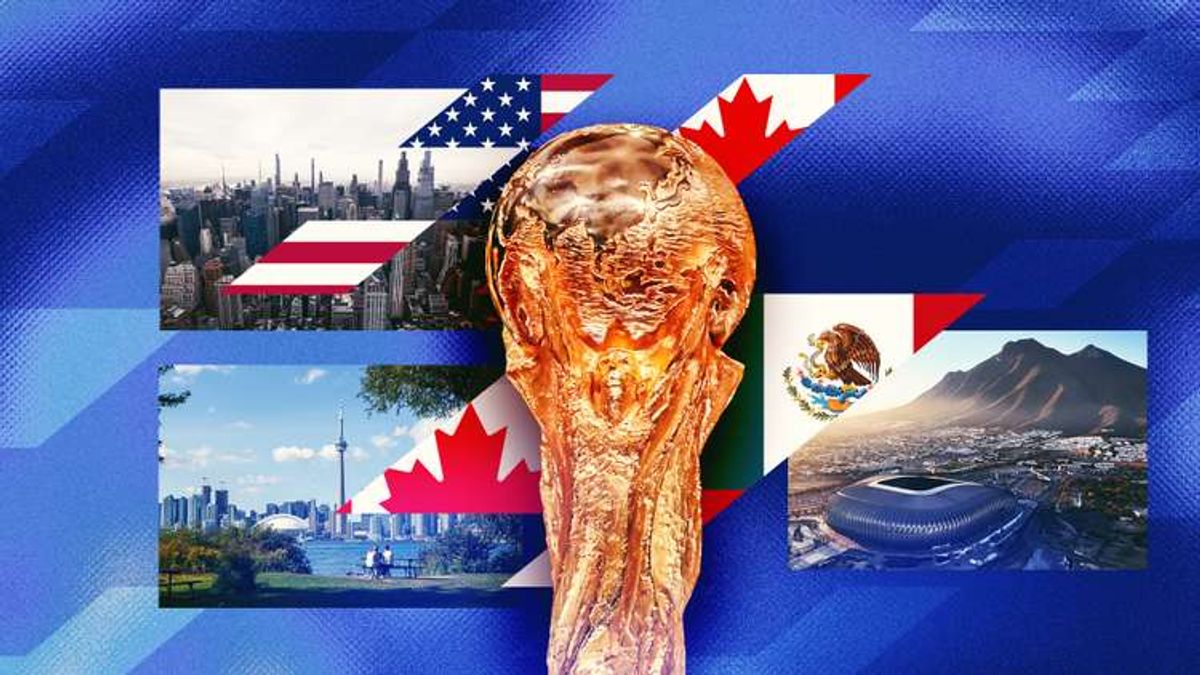
The World Cup has brought all sorts of political and logistical problems, but those involved in planning remain committed to putting on a show.Every day, Sharon Bollenbach drives past the stadium. Technically, it is still named BMO Field. Toronto FC play there.But in under three months, its name will have changed. Then, it will be called Toronto Stadium. She hopes it will be packed with fans from around the world. In her mind, she pictures a place full of noise, light, and a spectrum of colors. That stadium, revamped, renamed, and refurbished, will host World Cup games and, in theory, serve as a focal point of a city expected to put on a show.Such is the case for many of the 16 host venues. While there has been plenty of furor and anger about the way the World Cup is being handled at the highest levels, the city perspective is one of pushing forward, finding optimism, and picturing - if only on a drive to work - what a World Cup should look like.“It’s a privilege. I really believe that. Some days I have to remind myself of that, I’m not going to lie, but it really is a privilege to work on an event like this,” Bollenbach, an executive with Toronto’s host committee, told GOAL.Planning a World Cup is not easy. That much has been made clear in recent months and played out in public. But executing it is harder. And while stories circulate about money, clashes with the U.S. government, and controversy at a higher level, those in the day-to-day still have jobs to do. Host cities still have to put on a show and execute the event, even when the odds are stacked against them.“It comes with a lot of challenges, and knots and tangles and so on, but at the end of the day, we’re getting to work on the biggest global event on the planet, and we’re getting to encourage, embrace, and engage with our city and get others excited,” Bollenbach said.Zoom out, and the task is monumental. The World Cup will be played in 16 cities across three countries. A total of 48 teams will compete in 104 matches over 39 days. Every host city must prepare for, in theory, an influx of fans. They are also, in some way, obligated to promote their local area. Numerous host cities are also counting on the tournament to contribute to the growth of soccer locally. In effect, they must not only plan a World Cup but also secure its legacy.“It’s having that moment of being on the global stage and then, after, the fallout of people going, ‘Wow, Toronto, cool place,’” Bollenbach said.All of this is made more difficult by widespread public controversy. U.S. President Donald Trump has failed to deliver on promised funding for some host cities. A war in the Middle East has called Iran’s participation into question. Four teams: Haiti, Ivory Coast, Iran and Senegal, are facing travel bans by the U.S. government.In Mexico, gang violence has surged, with reports that some cities may face significant challenges in staging matches. Host committees, amid all of this, must maintain a steady public posture despite the turmoil in the background.“You have to focus on the details, and sometimes that’s messy and gets complicated. But then you reach out to these communities, and they are just so excited and over the moon, figuring out all they can do to celebrate, support and be part of it,” Bollenbach said.And the general sentiment is, somehow, one of optimism. All organizers can do is keep pushing forward with what they have. Thus far, they have worked effectively. There may be plenty of outside noise, but those on the ground each day are confident they are doing their jobs well.For them, it is a question of logistics. Yes, public discourse exists, but they must figure out everything in between. Kansas City, for one, must address how to transport fans from downtown to Kansas City Stadium, about 10 miles away. They were the first host committee to invest in bus transportation, a no-brainer that was sorted early.“What has to happen now is testing and readiness and making sure that all the systems we’ve planned work, that the transportation system operates and that the integration of all those team escorts works,” Pam Kramer, CEO of Kansas City’s host committee, said.Toronto, meanwhile, faced challenges with its stadium. To meet FIFA’s expectations and prepare for an influx of fans, they had to add about 17,000 temporary seats. That was difficult not only because of the scale but also because the stadium operates year-round. There is not, in theory, much time to complete the work.Yet, it has made it happen.“I drive by and I see there’s steel up and there are new seats going in … we’re really seeing progress now,” Bollenbach said.In Vancouver, the focus has been on ensuring its fan fest is ready. That means engaging the community.“We’re going to bring the community groups alive. We’ve been working really hard to make sure we get into the community and ensure that all industries, businesses, restaurants, bars, clubs and ethnocultural centers are part of it,” Jessie Adcock, Vancouver’s host committee lead, said.Part of the difficulty is that host committees face two-pronged challenges. The first is to execute the basic idea of a World Cup. All of the standard fixings and trimmings have to be in place to deliver what is certainly the biggest event global soccer has ever seen. Yet many have also made it their duty to showcase their communities.Sure, World Cups are for everyone. But each host committee is on a mission to promote its own identity, whatever that may look like.“We’re preparing to welcome the world. And I think what we want is for people to embrace Toronto, to be maybe surprised by Toronto and delighted, and, you know, wanting to come back and wanting to tell their friends and family to visit Toronto,” Bollenbach said.For them, that means leaning on the local community. Toronto is a diverse city with ethnic pockets throughout. They are counting as much on local fans to attend games as those traveling in from abroad. That requires money, though, and there has been room to spend it. The committee has allocated nearly $2 million for activations. Sixty-three events have been approved by the local government, highlighting a range of ethnic groups and communities.“There are so many football fans who are saying they never dreamed in their life that the World Cup would be coming to the city where they now live. And then you add that their team, their country, is coming, and it’s a whole other level,” Bollenbach said.Vancouver has taken a similar approach.“Vancouver and Toronto are two of the most diverse cities on the planet, right? Every ethnocultural diaspora is represented in our cities. We really stand to benefit from the composition of our cities already, because the world is already here,” Adcock said.For Kansas City, the task is tougher. They will host four base camps as well as six matches, including a quarterfinal. Preparing for that is no easy task, although it comes with opportunity.“When people come here, they see something that perhaps surprises them, that’s very appealing, not only as a place to visit but a place to maybe stay and live for a long time, which the teams will be doing here for a month. We’re pretty excited about that,” Kramer said.That, of course, comes with further complications. Kramer and her team have to collaborate with law enforcement to ensure there is an enhanced police and security presence to manage the influx of players and teams. There will be situations in which multiple teams travel to the airport on the same day. That will, no doubt, be a headache.Add GOAL.com as a preferred source on Google to see more of our reportingYet amid all of the optimism, there remains a complicated political backdrop. President Donald Trump, who has a close relationship with FIFA president Gianni Infantino, has repeatedly voiced and amplified anti-immigrant rhetoric. Some of his policies are, at the very least, in conflict with the core values of inclusion surrounding a World Cup. There is also a real chance that Iran will not participate in the tournament after the United States repeatedly launched airstrikes on the country.Host committees declined to comment on the specifics of the political climate. However, they emphasized their belief in hospitality and support, regardless of background or ethnicity.“We’re really leaning into who we are, which is incredibly welcoming and hospitable, and making sure that we communicate that in every place we can. We’ve been focused on that from the beginning,” Kramer said. “It is very authentic to the Midwest. There’s this genuine hospitality. We’re making sure that we’re communicating that at the airport, at bus stops and everywhere we can.”Those outside the United States distanced themselves from the politics but emphasized their eagerness to welcome a global community.“Not to be negative toward the U.S., but Canada is here, and we’re willing to welcome people from all nations to celebrate this World Cup,” Bollenbach said.And perhaps there is something about a World Cup that might be unifying.Last summer, the World Cup trophy popped up in Canada. It was displayed in an Italian enclave on the east side of the city. Viewing was available for two hours on back-to-back days, and 5,000 people showed up just to have their photo taken with the trophy. If that was a test run, things went rather well.“All these countries were represented, people showing up in their country colors and jerseys,” Adcock said.It was a brief moment that may indicate an adequate level of preparation for something larger. Kansas City had its own tests in the form of Taylor Swift’s Eras Tour. Toronto, meanwhile, doesn’t really know until it starts.Still, everyone planning this event must block out the noise, get their heads down and put on a show. After all, it is all they can do.“I have augmented reality built into my brain. I can look at the road in front of the stadium. I can see it as it is now,” Adcock said. “All I can see is that, 90 days from now, it will be there.”
The Drive Towards Hosting an Unprecedented Event
The journey towards hosting the World Cup is an arduous one, fraught with obstacles and hurdles. From dealing with financial issues to navigating political tensions, the path is far from easy. Yet, amidst all the chaos, individuals like Sharon Bollenbach of Toronto's host committee hold onto the belief that organizing such a global spectacle is a privilege.
Overcoming Adversity on a Global Scale
With the World Cup spread across 16 cities in three countries, the challenges are manifold. The necessity to prepare for an influx of fans, ensuring smooth logistics, and promoting local communities adds layers of complexity. Despite facing travel bans, funding woes, and security concerns, host committees remain resolute in their efforts.
Local Engagement and Legacy Building
One of the key focal points for host cities is not just the successful execution of the World Cup but also leaving behind a lasting legacy. From increasing seat capacity to organizing community engagements, each city aims to showcase its unique identity and hospitality. Embracing diversity and promoting inclusivity are core themes resonating with host committees.
Navigating Political Diversions
While political tensions simmer in the background, host committees are steadfast in their mission to set aside differences and welcome a global audience with open arms. Amidst conflicting policies and uncertain participation, the emphasis remains on hospitality and inclusiveness, traits deeply embedded in the fabric of host communities.