Arsenal's Quest to Overcome League Cup Final Defeats - Mikel Arteta's Mission to Shed 'Bottlers' Tag
Arsenal faced a setback in the League Cup final against Manchester City, adding to their history of final losses. Can Mikel Arteta guide the team to bounce back and overcome the 'bottlers' tag? Explore the club's past final defeats and the challenges ahead.
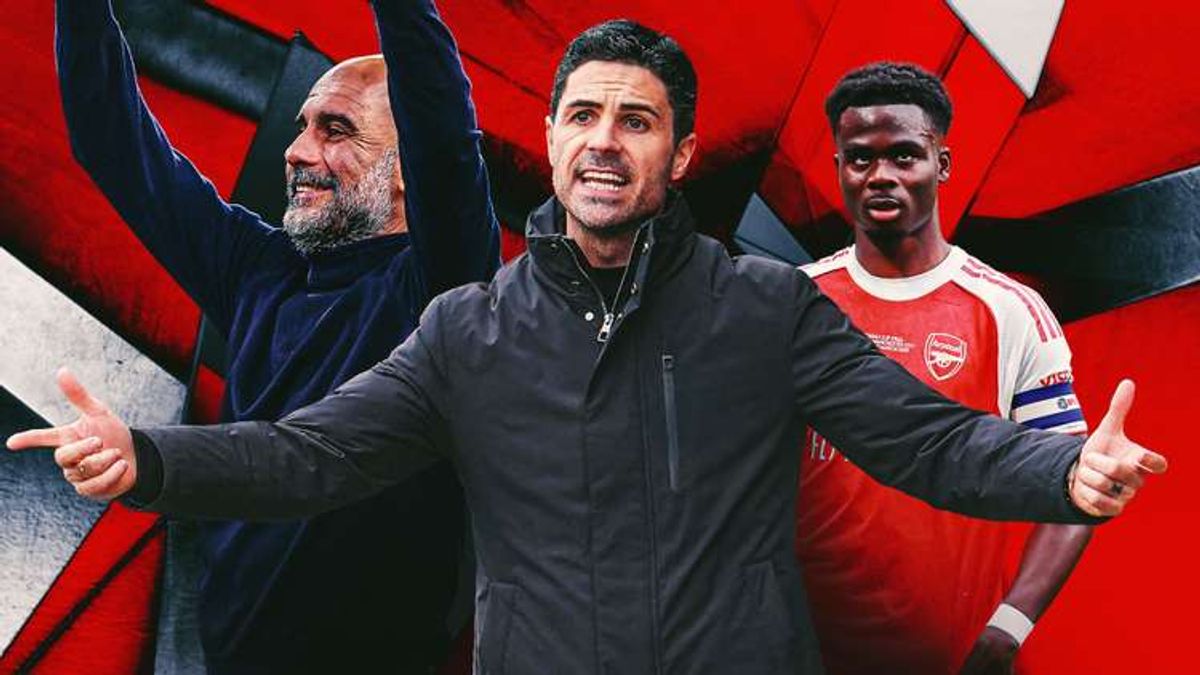
Arsenal went into Sunday's League Cup final with Manchester City hoping it would be the first stop of their quadruple tour. The Gunners had entered the last third of the 2025-26 season as favourites to win all four competitions they were competing in. At the first Wembley hurdle, however, they fell apart.Nothing seemed to quite click for Mikel Arteta's side. They started fairly brightly with City goalkeeper James Trafford being brought into a triple save on six minutes, but that was really as good as it got for those in red.The 2-0 defeat to Pep Guardiola's men set an unwanted record - Arsenal have now lost more League Cup finals on the spin than any other team, taking their tally to four. The love affair the club has with the FA Cup doesn't quite extend to its EFL relative.Over the years, the winners of the League Cup tend to see a drop off in form down the final stretch of the season. That's a tradition Arsenal will be hoping continues in order to see off the threat of City and lift the Premier League, but the Gunners' own record of never quite fully recovering from final heartache is also a cause for concern.Arsene Wenger never won a League Cup in over two decades of managing Arsenal. He sought to treat the competition as a playground for the club's budding youngsters and for experimentation purposes. It took 'Le Professeur' until 2007 to reach his first final in the competition, and as a reward, he opted to start the players who had gotten them there. The lineup's average age of 21 was the youngest-ever in a professional English final. They came up against a Chelsea side managed by Jose Mourinho, one who at that point were back-to-back Premier League winners and were effectively England's answer to the 'Galacticos'.There was such a serious mismatch between the two XIs that you can only spell them out in order to grasp the difference in quality. Mourinho went full strength with: Petr Cech; Lassana Diarra, John Terry, Ricardo Carvalho, Wayne Bridge; Claude Makelele, Michael Essien, Michael Ballack, Frank Lampard; Didier Drogba, Andriy Shevchenko.In the red corner, Wenger started: Manuel Almunia; Justin Hoyte, Kolo Toure, Philippe Senderos, Armand Traore; Theo Walcott, Cesc Fabregas, Denilson, Abou Diaby; Jeremie Aliadiere, Julio Baptista.Remarkably, Arsenal took the lead through a 17-year-old Walcott, only for Drogba to equalise soon after. A feisty affair descended into chaos deep into added time after Drogba put Chelsea ahead, with John Obi Mikel, Emmanuel Adebayor and Toure all sent off.The consensus coming away from the last League Cup final at Cardiff's Millennium Stadium was that Arsenal were the better side on the day and had set themselves up for the future, yet they fell away in both the short and long-term. Wenger's side won only three of their 12 remaining Premier League games that season and were dumped out of the Champions League at the last-16 stage by PSV Eindhoven, while they wouldn't touch silverware again until 2014.Arsenal reached the League Cup final again 2011, and this time they were heavy favourites to end a trophy drought which at this point had become one of the first internet memes, at least in the football sphere. Birmingham City, who sat 14th in the Premier League, were the opponents, and Wenger was ruthless with his lineup on this occasion, naming his strongest possible XI to get the job done.Yet Arsenal still contrived to lose anyway. Nikola Zigic broke the deadlock for the Blues just before the half-hour mark, but Robin van Persie ensured the tie was level heading into the break. As a tense game wore on, Birmingham grew in confidence they could spring an upset. They didn't have to work too hard to score the defining goal.A mix-up between Laurent Koscielny and goalkeeper Wojciech Szczesny allowed Obafemi Martins to sneak in and roll the ball into an empty net. Against the odds, Birmingham beat Arsenal in a major cup final, and neither side was the same after that. Alex McLeish's Blues won only twice thereafter as they tumbled down the table and were relegated to the Championship, while Wenger's men were also victorious on only two further occasions, which saw their title hopes evaporate as they dropped from second to fourth.Wenger's last final as Arsenal manager came in the 2017-18 League Cup, with City the opponents on that day. Ironically, this came with Arteta in the opposite dugout, with the Spaniard into his second season as an assistant to Guardiola.Arsenal's chances of prevailing were slim. This was a City side on their way to the Premier League's first - and to this day, only - 100-point season. They nearly took a surprise lead through Pierre-Emerick Aubameyang, but that opening was the highlight of the Gunners' afternoon. Sergio Aguero took advantage of some infamously weak defending from Shkodran Mustafi to put City in front, while second-half goals from Vincent Kompany and David Silva wrapped up an emphatic 3-0 win for Guardiola's side.News of Wenger's departure at the end of the season didn't officially break until April, but the breadcrumbs and tea leaves were all there that this would be his last dance. Qualifying for the Champions League by way of a top-four finish seemed incredibly unlikely, and so the Gunners tried their hardest to win the Europa League instead. They pushed Atletico Madrid all the way in a high-quality semi-final, but lost 2-1 on aggregate as the Wenger era ended in such a whimper that it needed Arteta to revive the club several years later.Add GOAL.com as a preferred source on Google to see more of our reportingCity condemned Arsenal to their fourth successive loss in League Cup finals on Sunday, this time with Arteta coaching against mentor Guardiola. It was a tie to prove the student had not yet become the master, with the Gunners thoroughly outplayed at Wembley.Between minutes 60 and 64, City left-back Nico O'Reilly twice snuck into the Arsenal box to take advantage of dinked crosses from the right flank. The first was in part gifted to him on a plate by Kepa Arrizabalaga, but the second came through sheer force of will. This was just reward for City, who were the team that stood up and decided they wanted to be the ones to decide the final themselves rather than let it pass them by.Focus now switches back to the Premier League title race, and O'Reilly has admitted City can sense an opportunity to leapfrog Arsenal in the standings. When asked by CBS Sports if his side can now 'smell blood', O'Reilly replied: "Yeah, 100 percent. The blood never went - we've always smelt blood. We're confident in ourselves, we know we can do it, they've got to come to our place which is a tough place to come to as everyone has seen this season. So we do smell blood and we've got to keep going. It does a lot for us [winning the final], builds momentum and just push on now. Obviously it's a big blow for them."But City do not have control of the title race. Destiny has been in Arsenal's hands for months and they have hardly even let any other side get within touching distance of themselves.The points gap currently stands at nine, though City have a game in hand and welcome the Gunners to the Etihad Stadium on April 19. Yet even if Arsenal lose that encounter and the deficit is reduced to three points, they would still ultimately lead the standings for the run-in.Arteta also tends to learn from his mistakes. After Arsenal were thrashed 4-1 at the Etihad towards the end of their first title-challenging season, he decided to make the team a defensive juggernaut. Their 2024-25 campaign was undone by an injury crisis which exposed their lack of depth, and they rectified this deficiency with a busy summer transfer window that allowed them to be in quadruple contention this year.Arsenal remain the team to beat. This was their first loss by more than one goal all season. The irony is that they may have to not beat themselves if they are to get over the hump once and for all.Arteta was, obviously, fairly subdued in his post-match interviews, though he did retain a sliver of hope for the future. There is still plenty of belief that this can be a special season for Arsenal.Asked on how he will pick the players up again, Arteta responded: "Well, especially to have some perspective on it and what this team has done in the last eight months has been incredible and we're going to use this disappointment and this fire in the belly to have the most amazing two months that we have ever together and that's on us and we'll manage that energy in the right way. Now we have to go through that pain and disappointment and it's normal and it's part of football."It's easy enough to say all this, but it's another thing to enact it. What if Arsenal go a goal down in their next Premier League match at the Emirates? How will the crowd respond? Is it too engrained in the club's DNA to fall away at the last? Will the visceral chants of 'second again, ole ole' get to these players? We're about to see the true character of this team.
A History of Final Setbacks
Arsenal's recent League Cup final loss to Manchester City marked their fourth consecutive defeat in the competition, raising concerns about the team's ability to overcome final hurdles. The club's past experiences suggest that such setbacks have often derailed their seasons, leading to a struggle for form and silverware.
Lessons from the Wenger Era
Under Arsene Wenger, Arsenal faced similar challenges in League Cup finals, with defeats impacting their performance in subsequent matches. Despite Wenger's success in other competitions, the League Cup remained elusive, further emphasizing the team's struggle to recover from final heartaches.
Arteta's Approach and Resilience
Mikel Arteta's leadership presents a new opportunity for Arsenal to address their 'bottlers' tag and transform their fortunes. Arteta's focus on learning from setbacks, adapting tactics, and instilling resilience in the squad highlights a different mindset aimed at overcoming past failures.
The Path Forward
As Arsenal navigate the Premier League title race and aim to maintain their lead despite the League Cup defeat, Arteta's ability to motivate and rally the team will be crucial. The upcoming matches will test the team's character and their response to adversity, offering a chance to rewrite their narrative.