
Japan Emerges as a Strong Contender for the 2027 Women's World Cup
With the 2027 Women's World Cup approaching, Japan has proven their contender status through their recent triumph at the Asian Cup. Building on past successes and a new generation of talent thriving abroad, Nadeshiko is poised to challenge powerhouses like Spain, England, and the U.S. Let's delve into how Japan has evolved and why they should be taken seriously as potential champions.
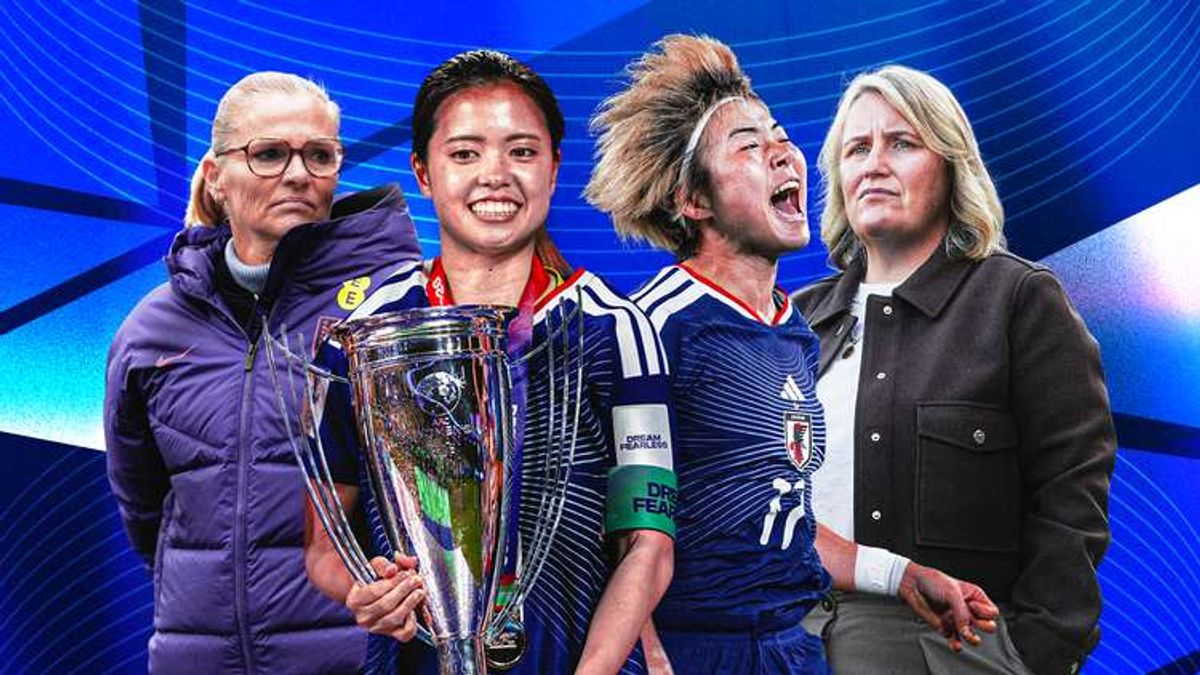
With little over a year to go until the 2027 Women's World Cup kicks-off, some of the front-runners for the trophy are obvious. Spain, the reigning champions, and England, the 2023 runners-up, who beat La Roja in the European Championship final last summer, are right up there. The United States' Olympic triumph in 2024 saw them reinstate themselves at the top of the international game while Brazil, as hosts and South American champions, will fancy their chances, too. This month's Asian Cup, though, has served as a reminder that Japan should also be considered as being right in that mix.At the 2023 Women's World Cup, Nadeshiko hinted at their credentials. Boasting the sixth-youngest squad at the tournament, Futoshi Ikeda's side battered Spain 4-0 in a stunning group-stage encounter that left many questioning their assessments of La Roja. In the end, it wouldn't be a perfect indicator of how the tournament would pan out. The two were set to meet again in the quarter-finals, but Japan stumbled against Sweden, the side Spain would instead beat 2-1 in the last eight as they went on to lift the title.Fast-forward just less than three years and a lot has changed. Japan have a new coaching staff, led by former Denmark boss Nils Nielsen, and that young squad has grown more experienced while staying together. Indeed, 18 players from the last World Cup were part of the side which triumphed in the Asian Cup on Saturday, beating hosts Australia 1-0 in the final for a well-deserved title, having stood out as the best team throughout the tournament.Japan marked the cards of many with that shockingly big win over Spain in 2023 and are now showing that such a performance was not a flash in the pan. World Cup winners in 2011 and finalists in 2015, Nadeshiko are again looking like contenders for the biggest prize on the international stage, with a new generation of talent that is largely thriving abroad, rather than at home.There is only one player in the current Japan squad who connects the current generation to that of 2011 and 2015. Now aged 35, Saki Kumagai was involved in both of those World Cup tournaments and is right up there as one of the greatest players her country has ever produced, winning five Champions League titles during her time at Lyon.Before her move to the French giants, Kumagai was in Germany with Frankfurt, making her just one of only six players in Japan's 2015 World Cup squad to be based abroad. It was a trail blazed by those who came before her, such as Kozue Ando and Yuki Nagasato, and one that Kumagai followed in order to experience a new level and a different style."Of course, it's my opinion, but the football of Europe, the big vision they have and the way they are progressing so quickly, that's why I want to play in Europe, until I can't play," she told GOAL in late 2024, while still in Italy with Roma.Today, the numbers are so different. Japan won the Asian Cup this month with a squad in which only four of the 26 players still play their football at home in the WE League. Just three years ago, Ikeda's 23-player World Cup squad featured 14 Japan-based players. "Finally," Kumagai said with a laugh when discussing the growing number of players moving abroad.It's something she had wanted to see for a long time, as she always believed it was important for the national team to improve."Here in Europe we can get an experience that... If we stay in Japan, we experience a lot of things, of course, good things and bad things, but if you stay in Japan, we can't get 'it'," she explained, trying to find the best way to convey her point in English, one of four new languages she has picked up since moving to Europe in 2011. "I told [my team-mates that] a lot of times and so I am so happy now that a lot of players will do the challenge in Europe and get to play Champions League also."Of course, it's not easy for each individual to want to make such a big move abroad. Kumagai has no challenges now. Indeed, when GOAL asked if it helps her to have other Japanese players at the same club, she quite simply, and hilariously, responded: "I don't care. It's not important for me."It's not that she doesn't enjoy the familiar company, not at all, but rather that she has got used to being without her compatriots over the years, so it has not been essential for her.When Kumagai first arrived in Europe as a fresh-faced 20-year-old, however, "it was so hard", particularly when it came to learning a language like German, which is so different from Japanese. As such, it's understandable that it might not be a challenge that every individual wants to take on."If they don't want to go, I think it's not possible," Kumagai conceded.Add GOAL.com as a preferred source on Google to see more of our reportingBut that's changed so much in recent years. More and more players are taking that big leap abroad, and many are doing it while still only teenagers. Why?"I think it's because we want to win, for example, the World Cup and Olympics," Yuka Momiki, the Everton star who wasn't involved in Japan's Asian Cup squad, but played for her country as recently as in November, explained previously. "Playing in Japan is exciting but compared to England, it's not physical. Maybe we are technical, not physical, so if we want to improve, you need to be more physical. That's why we come here and challenge ourselves and bring all these things to the national team and try to win the World Cup."It's something Yui Hasegawa reiterated when speaking to GOAL just before the current season got underway."It is really important, this kind of environment where we can play with other players who represent their countries every day," the Manchester City midfielder added. "That could contribute to make our national team much better."Kumagai said similar: "When we wear the national team jersey, of course, we are not playing against Japanese players. Every time, we are against foreigners. [Our players] want to, I think, grow up also, and they also realised it's important to play every day against or with foreigners at a high level, good players. That's why, I think."It's a compliment to England's Women's Super League that most are flocking to that division. Of the 22 players in Japan's triumphant Asian Cup squad who are based abroad, 16 play in the WSL. That doesn't include the six others in the English top-flight who didn't make the cut for this month's tournament, either.And these players are not just turning out for the big guns. Twelve of those 16 play for teams outside of the WSL's 'big four', meaning they are improving by playing in the league as a whole, rather than because they are in a highly-competitive internal environment or due to the benefits of Champions League football.But the main compliment here is to the talent Japan is producing, more than anything else. The quality coming out of the country, be it from the successful national team set-up or a growing domestic league that trusts in youth, is attracting attention in leagues across Europe and in the United States, leading to many of the sport's biggest clubs perusing the Japanese market."I think Japanese players are a little bit... I don't know how to say it, but a little bit 'extra'," Kumagai, now one of those in England after joining London City Lionesses last year, said. "Our playing style, there is a big difference to the European players or U.S. players, so if we can fit in the team, maybe we can do a lot of things for the team also. That's why a lot of teams want to get the Japanese player, I think."That 'extra' quality has been on show throughout the last three weeks, culminating in Japan beating Australia to win the 2026 Asian Cup on Saturday. It was on show as Riko Ueki scored a Golden Boot-winning six goals in just four games; as Maika Hamano curled in a brilliant and decisive strike in the tournament's final; as Toko Koga produced brick wall performance after brick wall performance in defence; as Aoba Fujino consistently stood out as one of the most dangerous forwards, playing more key passes than anyone else; as Hasegawa showcased her world-class qualities in midfield, alongside the similarly impressive Fuka Nagano. Every single player was outstanding.And that is perhaps the most exciting thing of all, that the quality shone throughout the 26-player squad. Nilsen used 25 of those available through the three weeks, making changes aplenty from game to game, and yet Nadeshiko still brought incredible fluidity and dominance to the table, with wonderful chemistry on show regardless of the XI. There were some big names not included in the squad, too, such as Momiki or Angel City's Hina Sugita, plus a number of young players who just missed the cut but could be involved at the World Cup next summer.This is a deep, deep squad, one with world-class talent and remarkable cohesion, but also an ability to get over the line. That was missing at the 2023 Women's World Cup, in that underwhelming defeat to Sweden in the last 16. But it was on show in Saturday's final, as Nadeshiko dug deep to see out their 1-0 win. It's yet another reason to believe that Japan are right up there as contenders for the 2027 Women's World Cup, alongside the likes of Spain, England and the U.S.
Japan's Rise to Contention
At the 2023 Women's World Cup, Japan showcased their potential with a remarkable victory over Spain, hinting at their credentials as a powerhouse in women's football. Despite setbacks, including a loss to Sweden, Japan has regrouped under new coaching staff and a more experienced squad.
The Evolution of Japanese Talent
Japan's shift towards developing players abroad has propelled their growth, with only a few in the current squad playing domestically. Players like Saki Kumagai have paved the way for this transition, emphasizing the importance of experiencing different styles of play and higher levels of competition.
The Impact of Playing Abroad
Japanese players seeking challenges abroad are driven by the desire to enhance their physicality and technical skills, crucial for competing on the global stage. Leagues like England's Women's Super League have become attractive destinations, offering a competitive environment for these athletes to flourish.
Quality and Depth in the Squad
Japan's recent Asian Cup victory highlighted the depth of their squad, with standout performances from players like Riko Ueki, Maika Hamano, and Yui Hasegawa. This cohesive unit, coupled with tactical flexibility and resilience, makes Japan a formidable force heading into the 2027 World Cup.
Looking Ahead to the 2027 Women's World Cup
As Japan continues to harness its talent pool and adapt to international standards, they are primed to challenge the traditional powerhouses for the 2027 Women's World Cup title. With a blend of experienced veterans and emerging stars, Nadeshiko is on course to make a strong statement on the global stage.