Italy vs Northern Ireland: A Historic Encounter and its Impact on Italian Football
Italy is preparing for a crucial World Cup play-off against Northern Ireland, a team that brings back memories of a bitter defeat. Dive deep into the history and repercussions of the 'Belfast debacle' that led to Italy's first-ever elimination in World Cup qualifying.
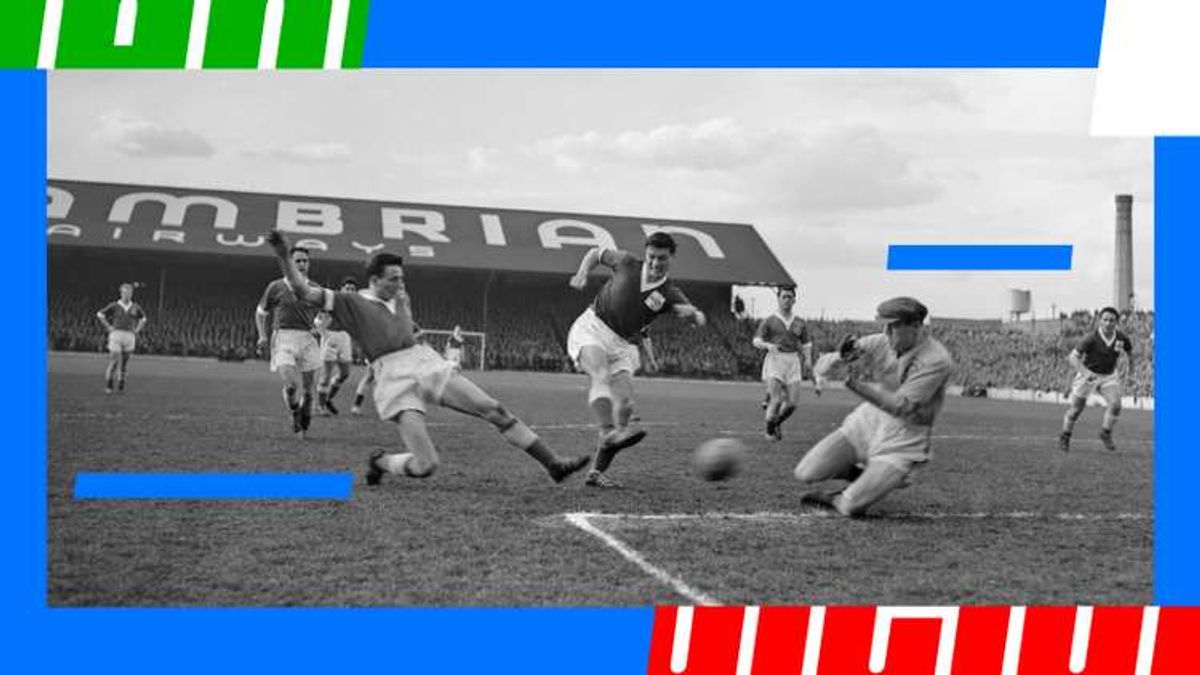
Italy is gearing up for its World Cup play-off against Northern Ireland, an opponent that brings back bitter memories “Northern Ireland are a physical side who never give up. They’re within our reach; we have to give it our all. Now we’re focusing on the semi-final, then hopefully we’ll be able to talk about Bosnia and Wales. We knew we’d have to go through the play-offs and we’re looking ahead with confidence” – Gennaro Gattuo, Italy manager, following the draw for the European play-offs for the 2026 World CupFrom Northern Ireland v Italy to Italy v Northern Ireland. Sixty-eight years on, standing between the Azzurri and the World Cup finals will once again be the Green & White Army, as the British side has always been nicknamed. Whilst it is true that, to reach the tournament, Italy will then have to overcome the winner of the other semi-final in Path A between Bosnia and Herzegovina and Wales, their first task will be to beat the Green & White Army. Today, as then, Italy are favourites and will be seeking victory, with two significant differences compared to the previous encounter. In 1958, the match was played in Belfast; this time, however, it will take place at the New Balance Arena in Bergamo, on home soil, and with a favourable home advantage – no small benefit for Gattuso’s side.Furthermore, the match that went down in history as ‘the Belfast debacle’ came at the end of the qualifying group stage, whereas the match Italy will face on 26 March will be a play-off, and therefore a one-off knockout tie. Come spring, Italy will certainly face an opponent that has never been an easy one in its history, having also come up against them during their disappointing run in the Qatar 2022 World Cup qualifiers. And the stinging defeat of 68 years ago, which saw the Azzurri – then two-time world champions – eliminated from a World Cup finals tournament for the first time (in 1930 in Uruguay they had withdrawn due to the difficulties and pitfalls of the long journey to South America), despite having taken place in decidedly unfavourable circumstances, still serves as a warning today not to underestimate the importance of this crucial fixture.Following the disappointing 1954 World Cup, which ended with Italy’s elimination in the group stage after losing a play-off against Switzerland, the Football Federation entrusted the national team to a technical committee led by Alfredo Foni, with the aim of revitalising Italy both tactically and in terms of results. Foni, fresh from winning two Scudetti with Inter in 1952/53 and 1953/54 built on the so-called ‘catenaccio’, that is, a tactical system involving the use of a sweeper behind three central defenders and a wing-back, known as the ‘tactical winger’, on the right flank, sought to combine traditional defensive solidity – entrusted to the best defenders from Inter, Juventus and Fiorentina, the strongest teams of the period – with a more creative attack.The shortage of top-class centre-forwards in Italian football during the second half of the 1950s prompted the manager to turn to players of foreign descent, who were very common in Serie A at the time. It was a choice dictated by necessity, but not without risks: many of these players were technically sound but now past their prime, and therefore physically less reliable than the foreign-born players of the past.Thus, highly experienced players such as Schiaffino, Ghiggia and Pesaola joined the Azzurri squad, alongside younger, talented standouts such as Firmani, Montuori – the team’s true star – and, at the last minute, Roma striker Dino Da Costa.Placed in Group 8 of the European qualifiers for the World Cup in Sweden, alongside Portugal and Northern Ireland, Alfredo Foni’s national team were the favourites despite being in far from brilliant form. This was because the Azzurri still enjoyed the prestige of the two World Cup titles won in 1934 and 1938. To compensate for their attacking difficulties, the manager bolstered the team from midfield onwards by bringing in players of Italian descent.The debut took place on 25 April 1957 at the Olimpico against Northern Ireland and ended in a hard-fought 1-0 victory, secured by Cervato from a free-kick. It was a tricky match, resolved in part thanks to decisive saves by goalkeeper Lovati, but one that offered encouraging signs, particularly in defence.However, the Azzurri’s confidence quickly crumbled. A few weeks later, in the International Cup match in Zagreb, Italy suffered a crushing 6-1 defeat against Yugoslavia, the first wake-up call for Foni and his management.The collapse was confirmed on 26 May in Lisbon, in the head-to-head clash with Portugal. Amidst injuries and concerns, the manager revolutionised the team by fielding five debutants, including the Italian-born players Ghiggia and Pesaola, but the move proved disastrous: the match ended in a clear 3-0 victory for the Portuguese, with Italy forced to finish the game with nine men due to injuries to Ghiggia and Chiappella, at a time when substitutions did not yet exist.“After a few minutes, the Portuguese crippled our right wing,” Chiappella recalled in 1990, “and by the end of the first half I’d picked up an injury too. There were no substitutions, so we basically played with nine men and it ended 3-0 to them.”In an era when two points were awarded for a win, the group standings read: Portugal and Northern Ireland leading on three points, Italy trailing on two, but with two matches still to play – the home return fixture against the Portuguese and the away return fixture against the British – and four points up for grabs. Tension and concern are sky-high ahead of the decisive fixture: the away match against Northern Ireland, buoyed by their emphatic 3-0 victory over Portugal, becomes the watershed moment in the Azzurri’s journey to Sweden.The decisive match in Belfast, scheduled for 4 December at Windsor Park, was, however, marred by an unexpected twist: the appointed referee, the Hungarian István Zsolt, was stranded in London due to fog and was unable to reach the stadium. To avoid postponing the match, the teams took to the pitch anyway, with a local referee taking charge. The match was thus formally reclassified as a friendly. In reality, that match had very little in common with a friendly and would go down in history as the ‘Battle of Belfast’ due to the fierce challenges and the hostility of a section of the Northern Irish crowd.This time, Foni got the starting line-up spot on, bolstering the defence with Corradi and, above all, with Rino Ferrario, the Juventus centre-back nicknamed ‘Mobilia’ and who went down in history as ‘the Lion of Belfast’ for the physical resilience he showed in that match and for having also faced a pitch invasion. Italy took the lead through Ghiggia, but Cush equalised immediately. In the second half, Montuori made it 2-1 from a Schiaffino assist, before Cush levelled the score again at 2-2. The Azzurri came close to victory in the closing stages with a spectacular shot from Bean that hit the post, whilst Nicolò Carosio’s radiocommentary painted a picture of an extremely tough match, almost spiralling out of control. “They’re beating up our players,” declared the famous voice of Italian football live on air.Only Ferrario and Chiappella gave the Northern Irish opponents a taste of their own medicine.“The atmosphere was electric,” Chiappella would later recall. “I myself was sent off whilst the Irish were targeting goalkeeper Bugatti. Bean hit the post; we could have won. But the match didn’t count towards qualification and it was a pointless draw.”The final 2-2 score, though of no official value, nevertheless showed a lively and competitive national team. Had it been an official match, the draw would have qualified Italy, given that a few days later the Azzurri comfortably beat Portugal at San Siro (3-0 in the fog with a brace from Gratton and a goal from Pivatelli). The Group 8 standings now read: Italy top with 4 points, Northern Ireland and Portugal (already eliminated) trailing on 3. Despite the advantage of needing just two points from a possible three, Foni had to contend with some major absences – Gratton, Cervato and Chiappella – and an openly hostile atmosphere. Furthermore, the brawls and hostile atmosphere that had built up during the first match in Belfast would weigh heavily on the decisive match on 15 January 1958.Accused of being too defensive, the manager opted for bold and risky choices: he brought in two Inter players, Vincenzi and debutant Invernizzi, and, heedless of Northern Ireland’s harsh winter weather, started the Italian-Brazilian Dino Da Costa from the outset. The Azzurri attack appeared brimming with talent but ill-suited to such gruelling physical and climatic conditions. The cold, the rain, a pitch reduced to a quagmire and Zsolt’s strongly home-biased refereeing completed the decidedly adverse picture for the Italian national team.The Azzurri got off to a poor start and conceded two goals in the first half-hour, scored by McIlroy and Cush. In the second half, Da Costa got his side back into the game by capitalising on a mistake by the opposing goalkeeper, but the sending-off of Ghiggia – the hero of the 1950 ‘Maracanazo’, who was particularly targeted by the opposition – for a reactionary foul, effectively scuppered any chance of a comeback. Down to ten men, the Azzurri were unable to find an equaliser and lost 2-1.“It was fate,” Chiappella would say. “Cervato and I were injured, and I had to stay in Abano to recover. The manager had to do without the Fiorentina contingent and called up two Inter players to match the Northern Irish physically. At the same time, he fielded three strikers—Ghiggia, Pivatelli and Da Costa—and two attacking midfielders: Montuori and Schiaffino. Good lads, but ill-suited and too fragile for that atmosphere.”And so the “Belfast defeat” unfolded: Italy, twice world champions, were knocked out of the World Cup finals for the first time; they would watch on TV as Brazil, led by rising star Pelé, won their first World Cup, and would experience one of the most bitter chapters in their footballing history. Northern Ireland, on the other hand, were celebrating, having qualified for Sweden alongside all the other British teams.MATCH STATISTICSBelfast (Windsor Park), 15 January 1958, 2.15 pmNORTHERN IRELAND v ITALY 2-1Goalscorers: 13’ McIlroy (NIR), 28’ Cush (NIR), 56’ Da Costa (ITA).NORTHERN IRELAND: Uprichard, Cunningham, McMichael, Danny Banchflower, Jackie Blanchflower, Peacock, Bingham, McIlroy, Simpson, Cush, McParland. Manager: P.D. Doherty.ITALY: Bugatti (Napoli), Vincenzi (Inter), Corradi (Juventus), Invernizzi (Inter), Ferrario (Juventus), Segato (Fiorentina), Ghiggia (Roma), Schiaffino (Milan), Pivatelli (Bologna), Montuori (Fiorentina), Da Costa (Roma). Federation Technical Committee, coach: A. Foni.Referee: Zsolt (Hungary).Attendance: approx. 43,000Notes: Ghiggia sent off in the 68th minuteAdd GOAL.com as a preferred source on Google to see more of our reportingThe “Belfast defeat” was followed by fierce controversy in the press, both sporting and non-sporting. There was dismay and disbelief at the result in Belfast: “The Azzurri knocked out of the World Cup”, read the front-page headline in *La Gazzetta dello Sport*. “The Azzurri deservedly lost the match against Northern Ireland in Belfast,” reads the headline inside *Il Corriere della Sera*. “Italian football rejected in Belfast,” writes *La Stampa*, entrusting the analysis of the defeat to Vittorio Pozzo. Gianni Brera, whose proposal to use Rocco’s Padova defensive block in Belfast had been rejected by coach Foni, writes instead in *Guerin Sportivo*:“Foni, rather than failing to understand that Padova’s catenaccio should have been played, simply did not dare. Thus, the Technical Commission had the brilliant idea of fielding, in Belfast in January, a front line consisting of four or five South Americans (who, incidentally, were not exactly spring chickens), whilst also replacing the two Florentine defenders, Chiappella and Cervato, with Inter’s Vincenzi and Invernizzi.”The famous journalist would later add in the pages of his “Critical History of Italian Football”: "The defeatis a bitter blow for all of us. The parties involved accuse one another. The opportunists blame Foni for the excessive number of ‘oriundi’ needlessly fielded; the defensive-minded lament the failure to deploy the Padua defence, which would surely have secured at least the essential draw. The use of foreign-born players was indeed excessive, but it essentially highlighted how lacking our football was in players of sufficient calibre. It seems incredible, but Foni himself, who had won two Scudetti with Inter by applying the ‘catenaccio’, stuck to the most dismal WM formation with the national team, and was left out.”The first consequence of the defeat was the immediate removal of Ottorino Barassi from his post as president ofthe federation, with the Federation being placed under administration. But whilst the executive would return a few months later as head of the newly formed National Amateur League, it was ultimately the players who would pay the price, despite likely being the least to blame.The squad that had qualified for Sweden ’58 was in fact quickly dismantled: Vincenzi and Invernizzi ended their time with the Azzurri with that ill-fated match in Belfast, along with Pivatelli andthe naturalised players Schiaffino and Da Costa, who were unfairly accused of ‘lack of commitment’, whilst Ghiggia made one final appearance in a friendly against Spain in 1959.And what of manager Foni? He was granted one more match on the national team bench, but another 3-2 defeat, this time against Austria in the International Cup, led to his dismissal by the football association’s leadership and the departure from the national team of players such as Ottavio Bugatti and Eddie Firmani, who had been part of the squad that contested the World Cup qualifiers. Ferrario himself, one of the most consistent performers, would bid farewell to the Azzurri after the subsequent friendly against France.
Italy vs Northern Ireland: A Tale of Redemption?
Italy's upcoming World Cup play-off clash against Northern Ireland is stirring up memories of a historic encounter that resulted in the Azzurri's first-ever elimination in World Cup qualifying. The stage is set for an intense battle as Italy aims to secure a spot in the World Cup finals by overcoming the Green & White Army.
Flashback: The Belfast Debacle of 1958
Sixty-eight years ago, Italy faced Northern Ireland in a crucial World Cup qualifier match that ended in a 2-1 defeat for the Azzurri. Despite being twice world champions, Italy could not overcome the physicality and resilience of the Northern Irish side, resulting in a devastating early exit from the tournament.
Tactical Shifts and Strategic Choices
The aftermath of the 'Belfast defeat' saw Italy's football landscape undergo significant changes. Manager Alfredo Foni's defensive strategies and team selection came under scrutiny, leading to a shake-up in the national team setup. The use of foreign-born players and tactical decisions faced criticism as Italian football sought to recover from the setback.
Legacy of the Belfast Defeat
The defeat in Belfast marked a turning point in Italian football history, leading to introspection and changes within the national team structure. The controversial match against Northern Ireland highlighted the challenges and complexities faced by the Azzurri as they navigated through the competitive world of international football.
Looking Ahead: Italy's Quest for Redemption
As Italy prepares to face Northern Ireland once again in a crucial play-off tie, the ghosts of the past loom large over the Azzurri. The journey from the 'Belfast debacle' to the present day serves as a reminder of the resilience and determination required to succeed at the highest level of the sport. Will Italy be able to rewrite history and secure a place in the World Cup finals?